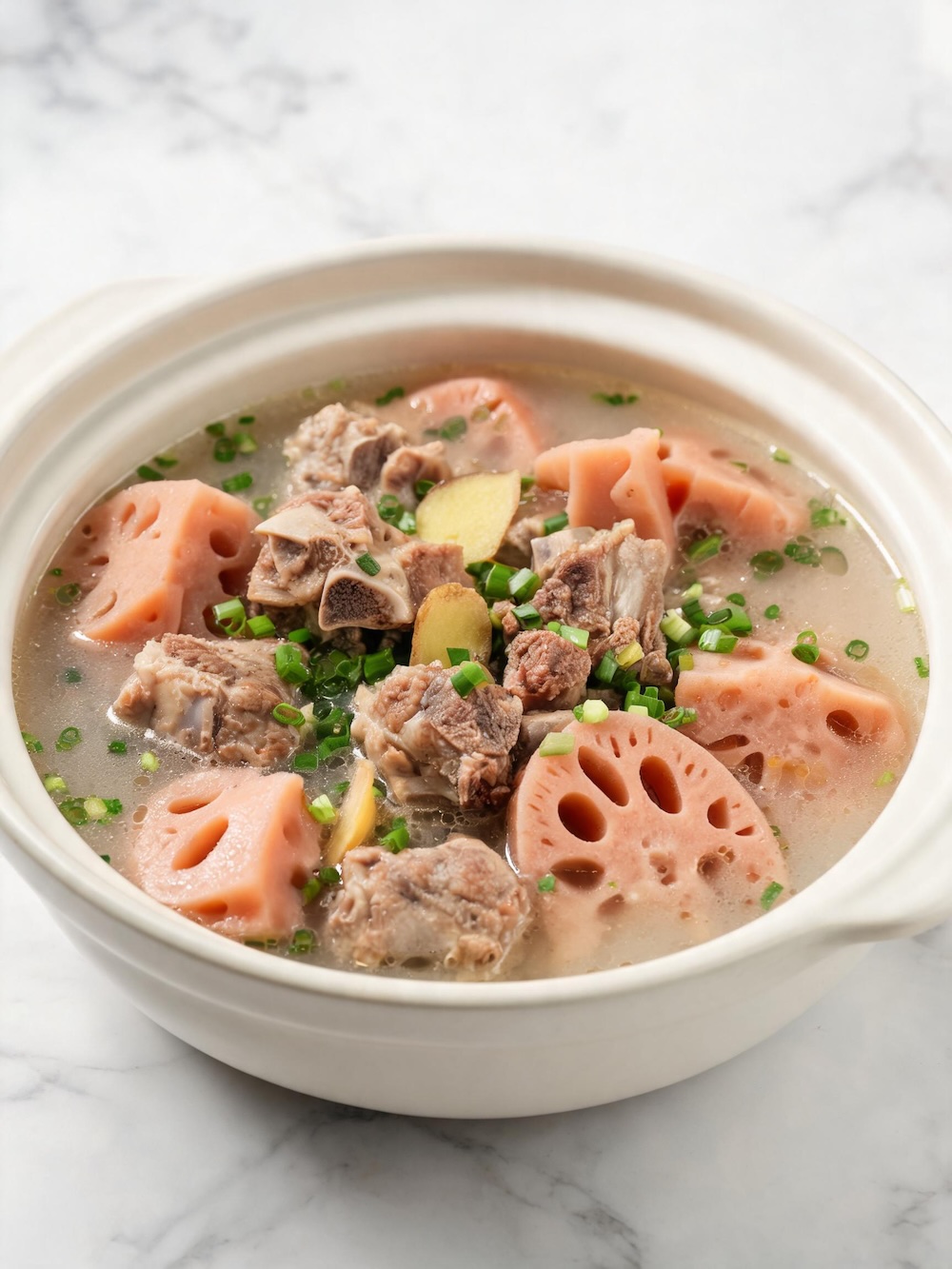
Lotus Root and Pork Rib Soup is a beloved dish among people from Hubei and a staple on autumn and winter tables. The lotus root is braised until starchy and tender, the pork ribs are fall-off-the-bone soft, and the broth is clear and slightly sweet. One sip warms you from the stomach to the heart. The method isn’t hard—the key lies in choosing the right lotus root and controlling the heat.
Prep time: 15 minutes | Cook time: 1.5–2 hours | Serves: 3–4
💡 Note on Ingredients: If you can’t find lotus root or dried tangerine peel at your local supermarket, check your nearest Asian grocery store. If lotus root is unavailable, you can substitute with daikon radish or corn on the cob, which also make a sweet and comforting broth!
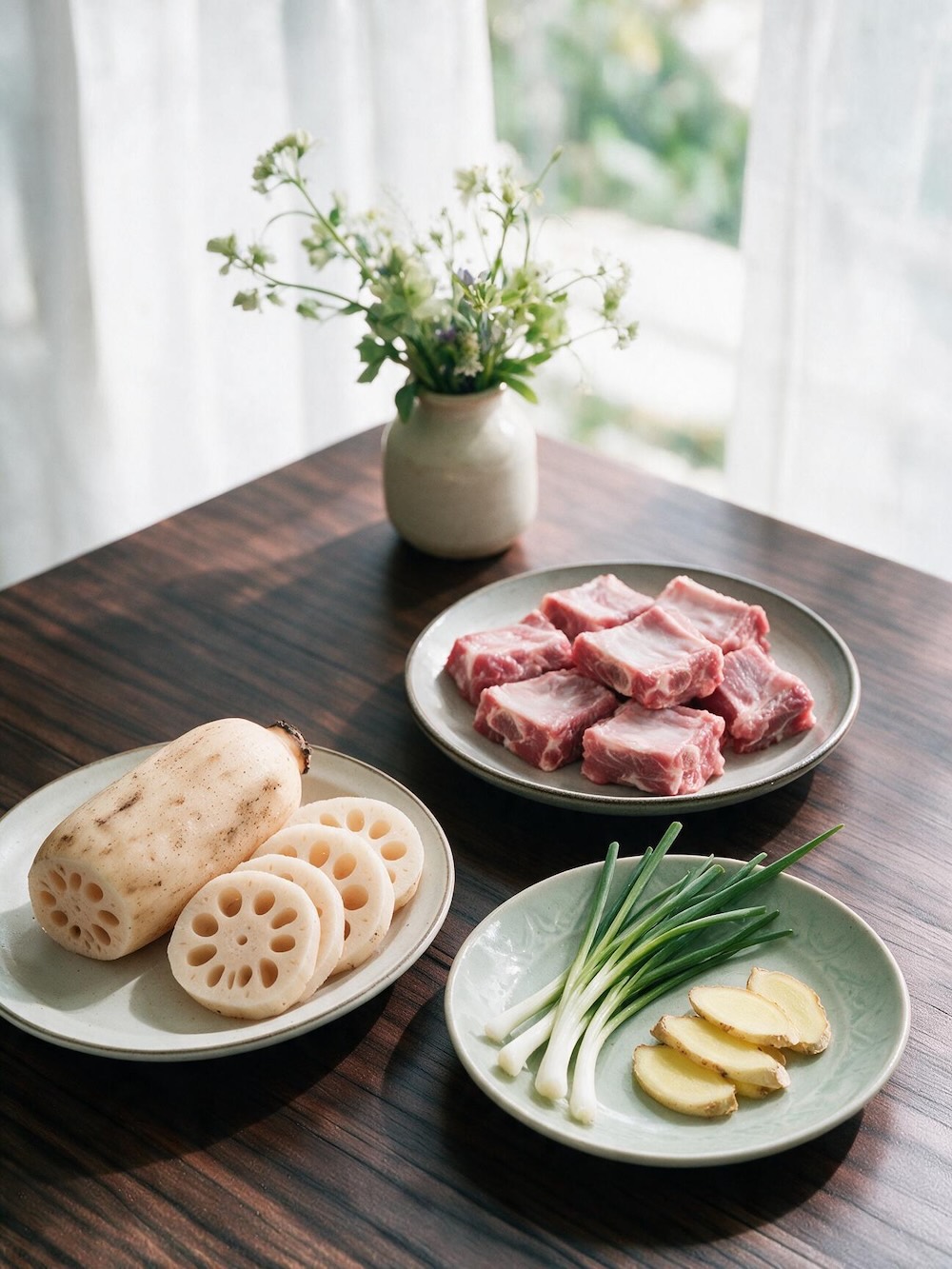
🌴 Ingredients:
· Pork spare ribs, 500g (about 1.1 lb)
· Lotus root, 2 sections (about 500g / 1.1 lb; choose the starchy kind—yellowish skin, short and thick)
🌴 Aromatics & Optional Add-ins:
· Sliced ginger, 4–5 slices (about 15g)
· Scallion stalks, 2 (about 30g; tied into a knot for the soup, plus a little chopped scallion for garnish)
· Cooking wine, 1 tbsp (about 15ml; for blanching)
· Goji berries, a small handful (about 10g; optional)
· Dried scallops, a few (about 10g; optional, for extra umami)
· Red dates (jujubes), a few (about 15g; optional, for sweetness)
· Dried tangerine peel (Chenpi), 1 small piece (about 2g; optional, for aroma and to cut the richness)
🌴 Seasonings:
· Salt, about 3–4g, to taste (add at the end)
· White pepper powder, a pinch (about 0.5g; add just before turning off the heat)
🌴 Instructions:
- Prepare the Ribs
Place the ribs in a pot with cold water. Add ginger slices, scallion segments, and 1 tbsp cooking wine. Bring to a boil over high heat. Skim off the foam and boil for 2–3 minutes. Remove, rinse with warm water, and drain well. ⚠️ Tip: Starting with cold water draws out the blood thoroughly. Don’t rinse with cold water, or the meat will tighten up. Draining well before braising keeps the soup clear. - Prepare the Lotus Root
Peel the lotus root and cut it into irregular chunks (roll-cut). Rinse the mud out of the holes. Soak the cut pieces in clean water to prevent oxidation for 10–15 minutes, then drain before adding to the pot. ⚠️ Tip: Choose starchy lotus root (yellowish skin, short and thick) for that soft, fluffy texture. Crisp lotus root is better for stir-frying and won’t get tender in soup. Don’t soak it too long, or it loses its sweetness. If you don’t clean the holes, the soup will have an earthy, muddy smell. - Braise the Soup
Place the ribs, lotus root, and ginger slices into a clay pot or soup pot. Add enough water to cover the ingredients by about 2–3 fingers (about 1500–2000ml / 6–8 cups). Bring to a boil over high heat, then reduce to low heat, cover, and simmer for 1.5–2 hours. For more sweetness and umami, you can add a few dried scallops or red dates; to cut the richness, add a small piece of dried tangerine peel. ⚠️ Tip: Add enough water at the start; don’t add cold water midway. If you must add more, use hot water. A clay pot makes the broth sweeter and clearer. Starchy lotus root becomes tender in about 1.5 hours—don’t simmer until it dissolves into the soup. - Season
Braise until a chopstick easily pierces the ribs and the lotus root gives way when poked. Add salt to taste. ⚠️ Tip: Add salt at the very end—salting early tightens the meat and dulls the flavor of the soup. Start with a little, taste, and add more if needed. - Add Goji Berries and White Pepper
1–2 minutes before turning off the heat, sprinkle in the goji berries and a pinch of white pepper powder. Let them sit for a moment. ⚠️ Tip: Adding goji berries too early makes them sour and clouds the soup—adding them 1–2 minutes before turning off the heat (or letting them steep in the residual heat) is better. Add white pepper just before turning off the heat to preserve its aroma. A little is enough—don’t let it overpower the natural sweetness of the lotus root. - Serve
Ladle into bowls, sprinkle with chopped scallion, and serve hot. The soup is clear and sweet. ⚠️ Tip: Use the scallion knot in the soup for flavor, and the chopped scallion as a garnish—keep them separate.
💡 Tips:
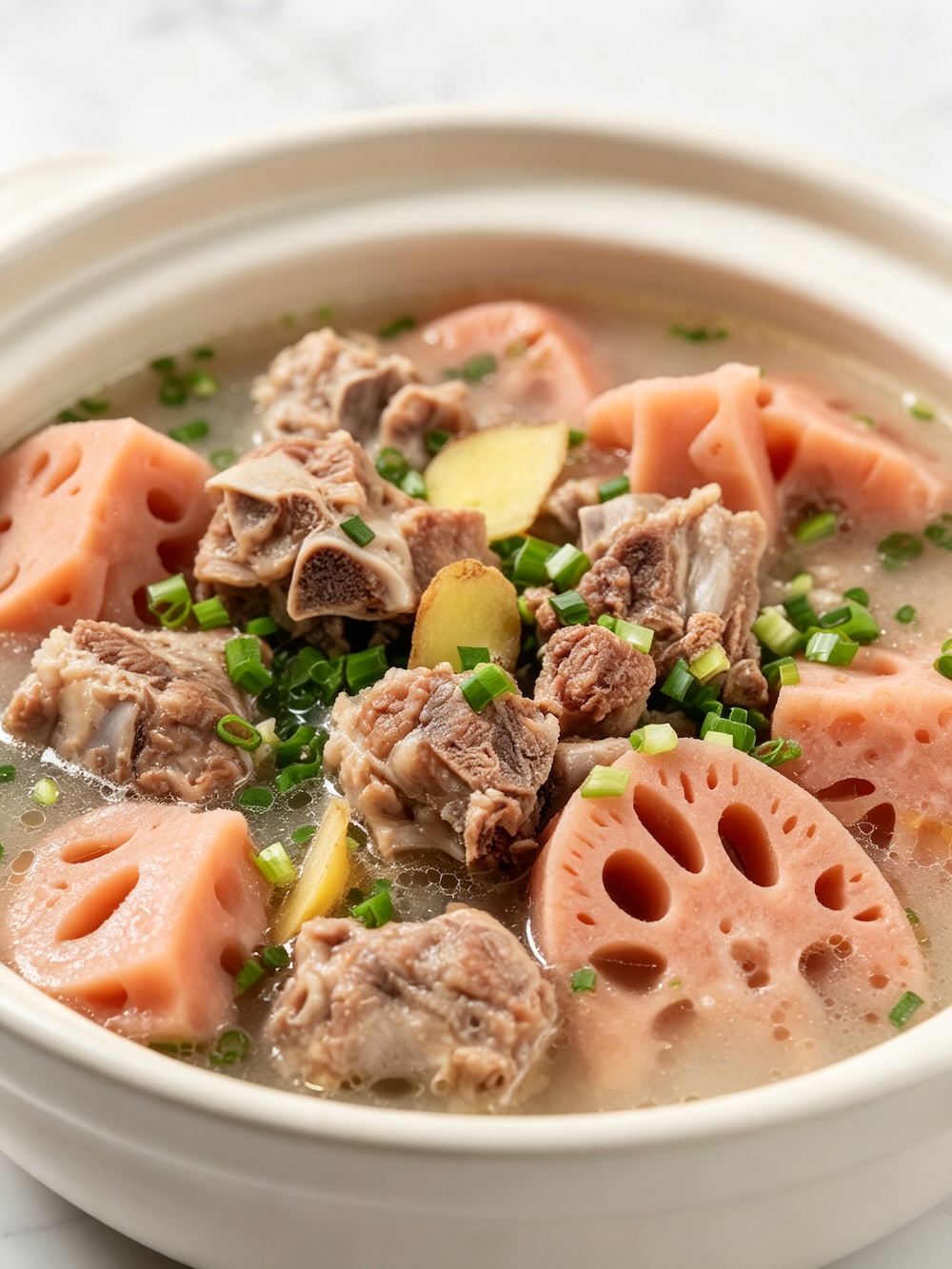
Blanch the ribs in cold water, rinse with warm water, and drain well before braising. Choose starchy lotus root (yellowish skin, short and thick), rinse the holes, and soak for just 10–15 minutes—don’t soak too long or it loses its sweetness. Add enough water at the start to cover the ingredients by 2–3 fingers, and only add hot water midway if needed. For extra sweetness, add dried scallops or red dates; to cut the richness, add a small piece of dried tangerine peel. Braise until a chopstick easily pierces the ribs and the lotus root is tender. Add salt at the very end and taste as you go. Add goji berries 1–2 minutes before turning off the heat, sprinkle white pepper just before serving, and garnish with chopped scallion. Done this way, the soup is clear and sweet, the ribs are tender, and the lotus root is starchy and soft—a bowl that warms you to the core!
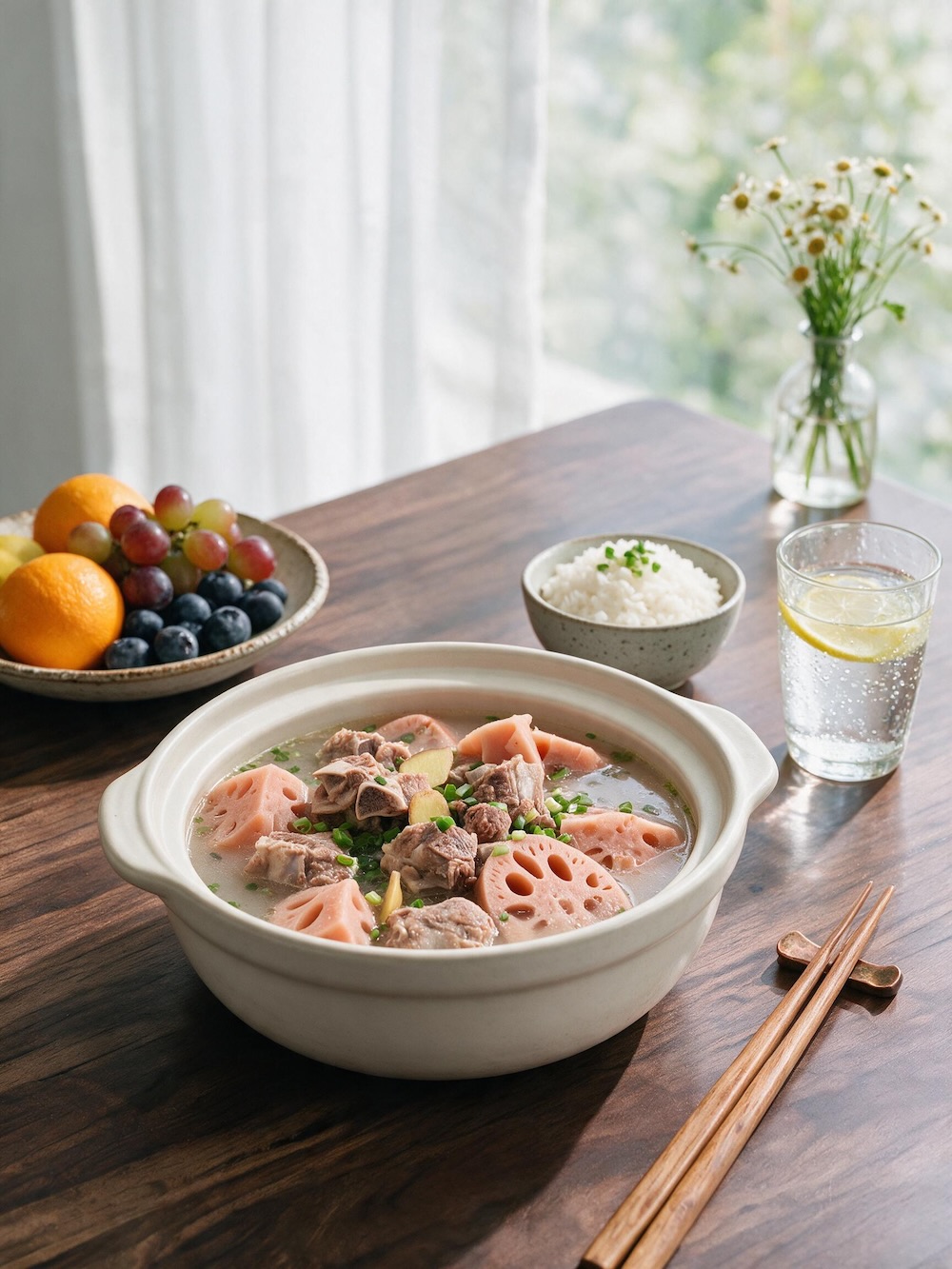
This Lotus Root and Pork Rib Soup is sweet, nourishing, and comforting—with tender ribs and starchy lotus root, it’s a must-have health-boosting soup for autumn and winter. If you enjoy this kind of light and sweet pork rib soup, you can also try my previously posted Pork Rib and Corn Soup (Pork Rib and Corn Soup). For more nourishing soups, check out my soups (soups) category!
❤️ Click the homepage for more delicious recipes!