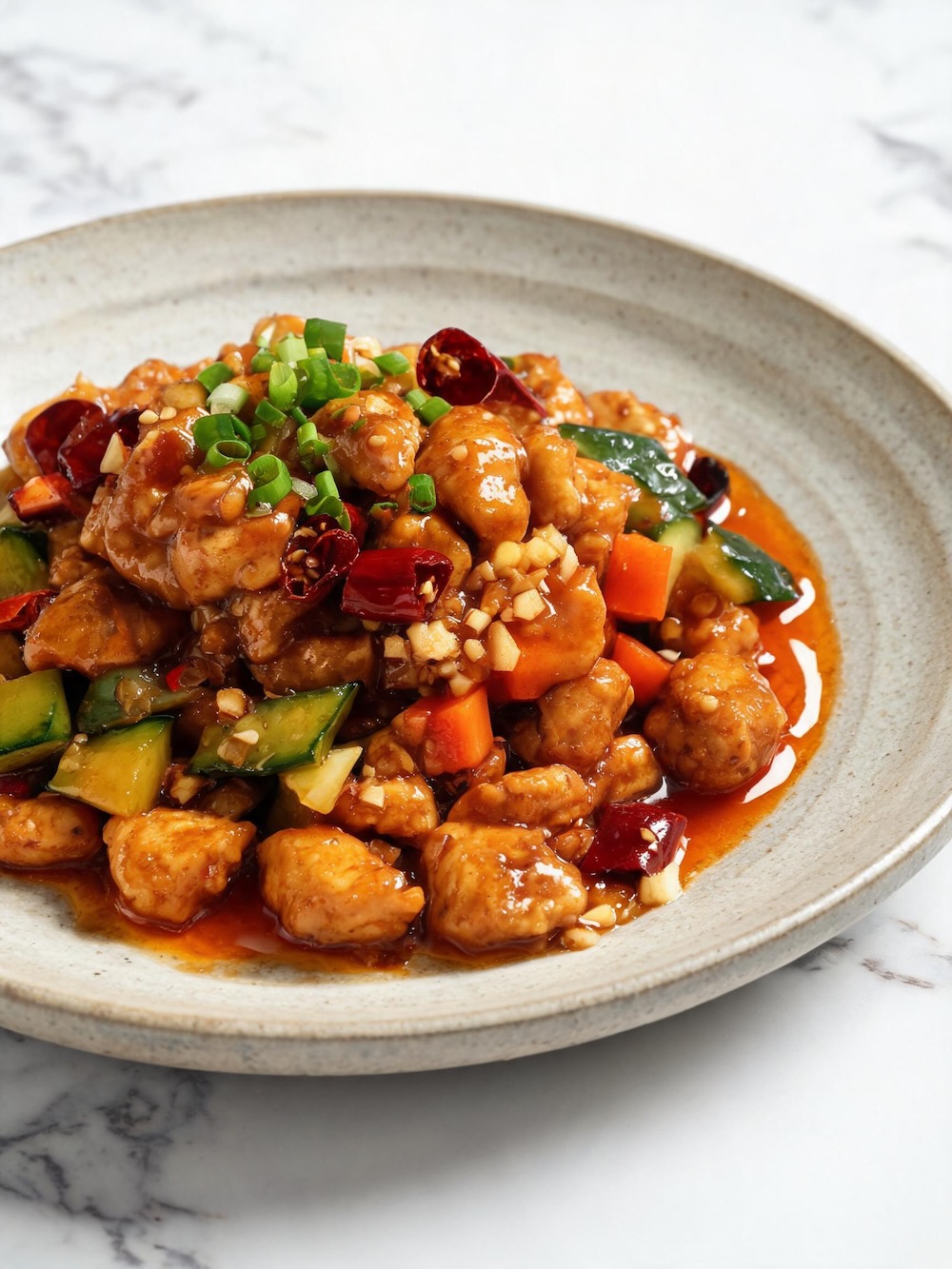
Kung Pao Chicken is a classic Sichuan dish. The chicken is silky and tender, the peanuts are crispy, and the sweet, sour, and slightly spicy sauce creates a perfect explosion of flavors. The method looks simple, but the heat control and the sauce ratio are the keys. Master this, and it will taste ten times better than takeout!
Prep time: 25 minutes | Cook time: 10 minutes | Serves: 3–4
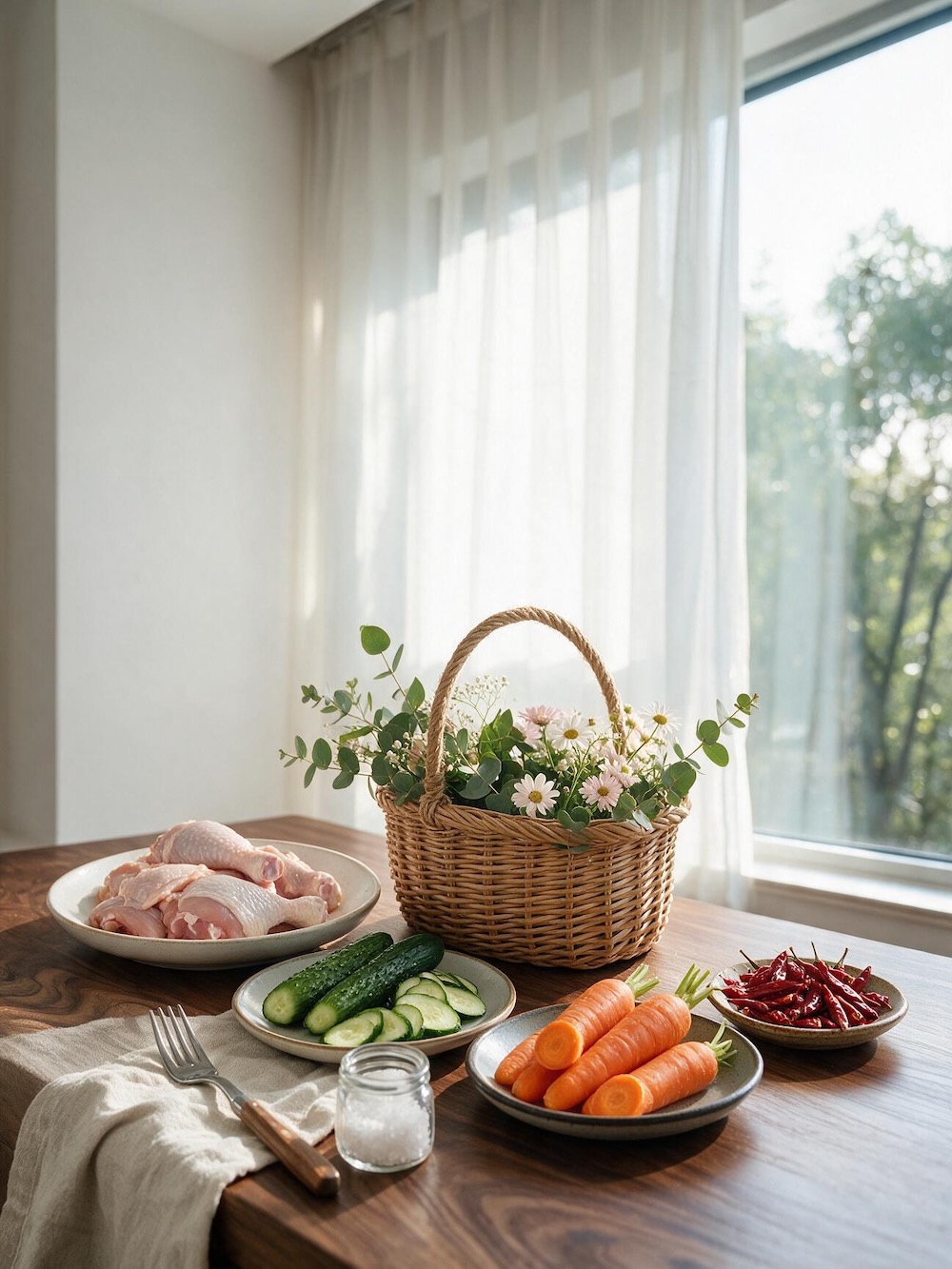
🌴 Ingredients:
· Chicken thigh meat, 2 pieces (about 300g / 10.5 oz; thigh meat is more tender than breast)
· Fried peanuts, a small bowl (about 50g; store-bought is easier)
🌴 Vegetables & Aromatics:
· Dried red chilies, 8–10 (about 10g; cut into segments, deseeded)
· Sichuan peppercorns, a small pinch (about 2g)
· Leek (or large scallion), 1 stalk (about 50g; cut into small segments)
· Sliced ginger, 3–4 slices (about 10g)
· Minced garlic, 3 cloves (about 10g)
· Cucumber, ½ (about 50g; diced, optional)
· Carrot, a little (about 30g; diced, optional)
🌴 For Marinating the Chicken:
· Cooking wine, 1 tbsp (about 15ml)
· Light soy sauce, 1 tbsp (about 15ml)
· Egg white, ½ (about 15g)
· Cornstarch, 1 tbsp (about 10g)
· White pepper powder, a pinch (about 0.5g)
· Cooking oil, ½ tbsp (about 7.5ml; to seal in moisture)
🌴 For the Sauce (Mix in advance):
· Light soy sauce, 2 tbsp (about 30ml)
· Chinkiang vinegar (or black rice vinegar), 3 tbsp (about 45ml; more vinegar than soy sauce is the key)
· Sugar, 2 tbsp (about 24g)
· Oyster sauce, ½ tbsp (about 7.5g)
· Cooking wine, 1 tbsp (about 15ml)
· Cornstarch, ½ tbsp (about 5g)
· Water, 2 tbsp (about 30ml)
All spoon measures are level. Light soy sauce is thin and salty; Chinkiang vinegar is slightly sweet and malty—use them as listed for the perfect sweet and sour balance.
🌴 Instructions:
- Cut the Chicken
Debone the chicken thighs and cut into cubes about 1.5cm (½ inch). Rinse them briefly with water and pat dry. ⚠️ Tip: Chicken thigh is more tender than breast and won’t dry out easily. Rinsing removes blood, and patting dry ensures the marinade sticks. - Marinate the Chicken
Add 1 tbsp cooking wine, 1 tbsp light soy sauce, ½ egg white, and a pinch of white pepper to the chicken. Massage with your hands until the chicken absorbs the liquid. Add 1 tbsp cornstarch and continue mixing. Finally, drizzle with ½ tbsp cooking oil to seal in the moisture, and marinate for 15 minutes. ⚠️ Tip: Massage until the liquid is absorbed and the surface feels sticky before adding the starch. The oil seals in moisture, keeping the chicken tender when stir-fried. - Make the Sauce
In a bowl, combine 2 tbsp light soy sauce, 3 tbsp Chinkiang vinegar, 2 tbsp sugar, ½ tbsp oyster sauce, 1 tbsp cooking wine, ½ tbsp cornstarch, and 2 tbsp water. Stir well and set aside. ⚠️ Tip: Mix it in advance so you’re not scrambling during stir-frying. The vinegar should be more than the soy sauce for the correct sweet and sour ratio. - Fry the Peanuts (If Using Raw)
Place the peanuts in a cold wok with cold oil. Fry over low heat until you hear a crackling sound and the skin turns slightly yellow. Remove and let cool. ⚠️ Tip: Cold oil and low heat keep the peanuts crispy without burning. Remove them when slightly yellow—the residual heat will darken them further. (Skip this step if using store-bought fried peanuts.) - Stir-fry the Chicken
Heat the wok and add oil. When the oil is about 50% hot (a chopstick inserted into the oil produces small bubbles), add the chicken and stir-fry quickly until it changes color. Remove and set aside. ⚠️ Tip: Don’t overcook—chicken gets tough quickly. Remove as soon as it changes color; it will return to the wok later. - Sauté the Aromatics
Leave the base oil in the wok and turn the heat to low. Add the dried chilies and Sichuan peppercorns, and slowly stir-fry until fragrant and the red oil releases. Then add the ginger slices, minced garlic, and leek segments and sauté until fragrant. ⚠️ Tip: Keep the heat low for the chilies and peppercorns—high heat burns them and turns the dish bitter. - Combine and Stir-fry
Return the chicken to the wok and turn the heat to high. Stir-fry quickly. Pour in the prepared sauce and continue stir-frying until the sauce thickens and coats the chicken. ⚠️ Tip: Give the sauce a quick stir before adding it (the starch sinks to the bottom). Stir-fry over high heat and turn off the heat as soon as the sauce thickens. - Add the Peanuts
Just before turning off the heat, add the peanuts and toss quickly to combine. ⚠️ Tip: Add the peanuts last—if added too early, they will absorb the sauce and lose their crunch. - Plate and Serve
Transfer to a plate and serve hot. The chicken is tender, the peanuts are crispy, and the sauce is sweet, sour, and slightly spicy.
💡 Tips:
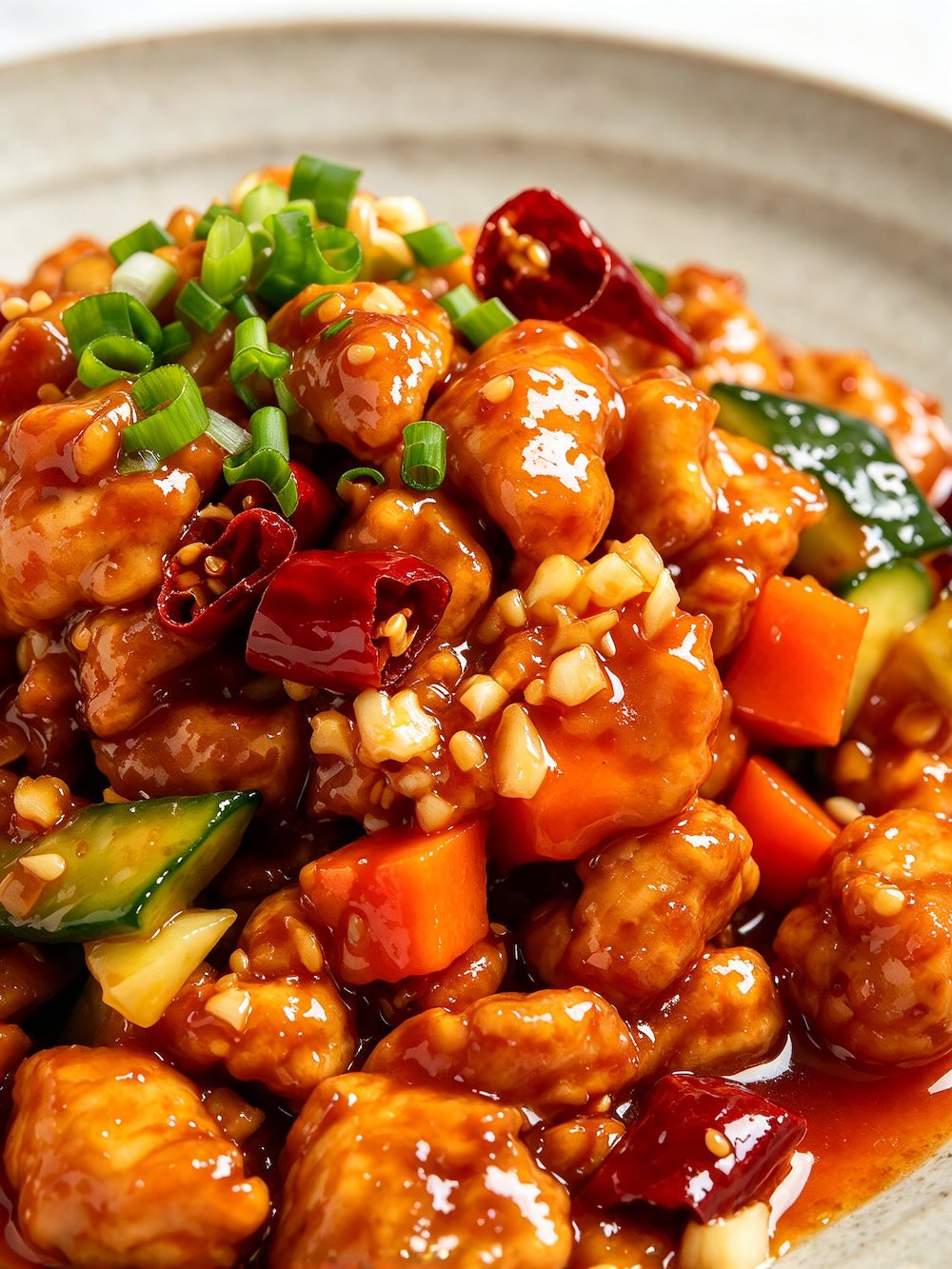
Chicken thigh is more tender than breast—cut, rinse, pat dry, and marinate. Massage until sticky before adding starch, drizzle with oil to seal, and marinate for 15 minutes. Mix the sauce in advance; more vinegar than soy sauce is the secret to the right sweet and sour flavor. Stir-fry the chicken just until it changes color, then set aside so it doesn’t get tough. Keep the heat low when frying the chilies and peppercorns. Stir the sauce before adding it, and reduce it over high heat. Add the peanuts at the very end to keep them crispy. Done this way, the dish is sweet, sour, and slightly spicy with silky chicken—an absolute rice-killer!
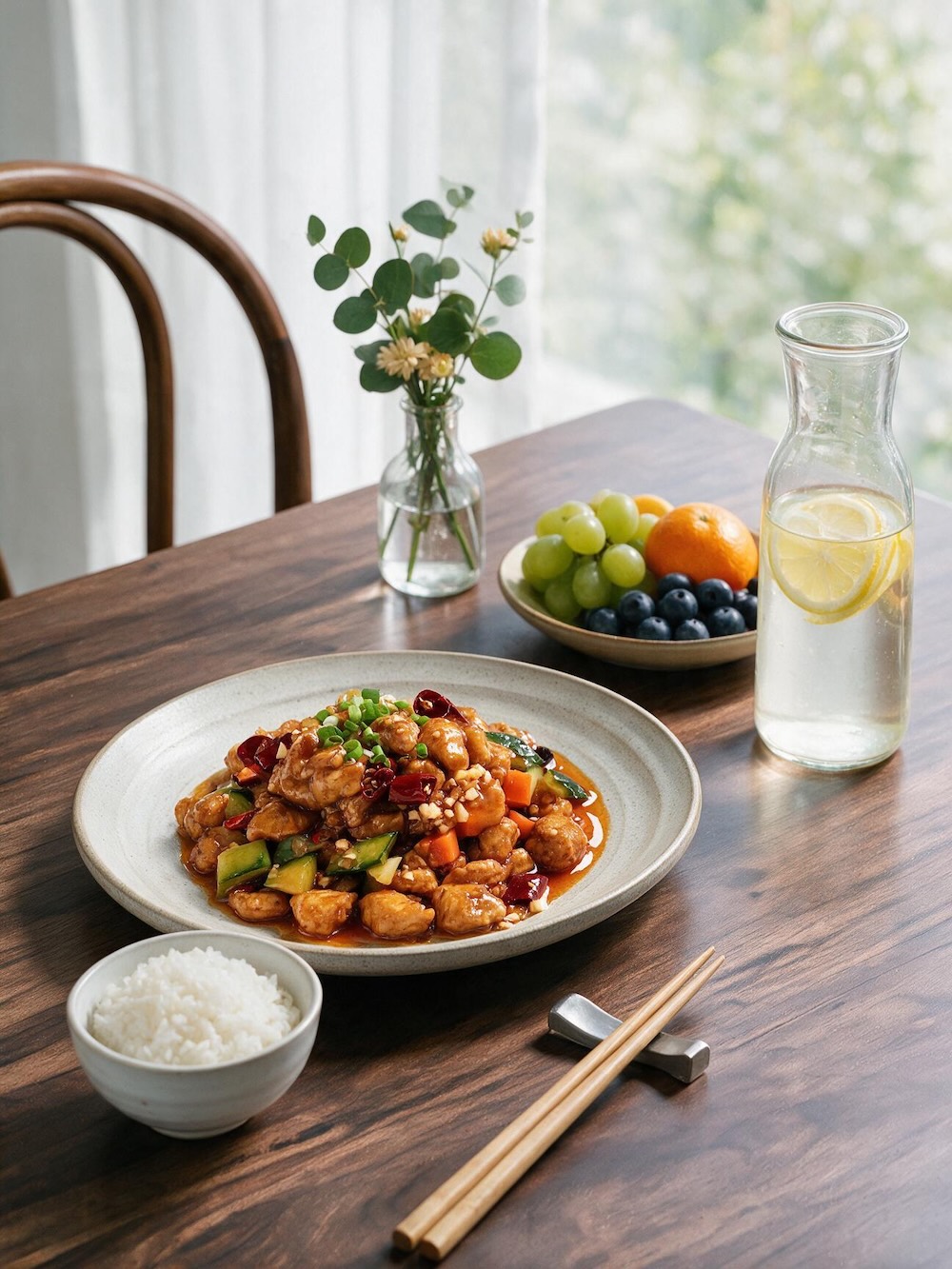
This Kung Pao Chicken is sweet, sour, slightly spicy, with tender chicken and crispy peanuts—a classic Sichuan rice-killer. If you like this Kung Pao flavor, you can also try my previously posted Kung Pao Shrimp Balls (Kung Pao Shrimp Balls). For more classic home-style dishes, check out my Home-style Dishes (Home-style Dishes) category.
❤️ Click the homepage for more delicious recipes!